Home of the world's largest Asian elephant gathering — hundreds of wild herds on ancient reservoir plains in Sri Lanka's Cultural Triangle.
Overview
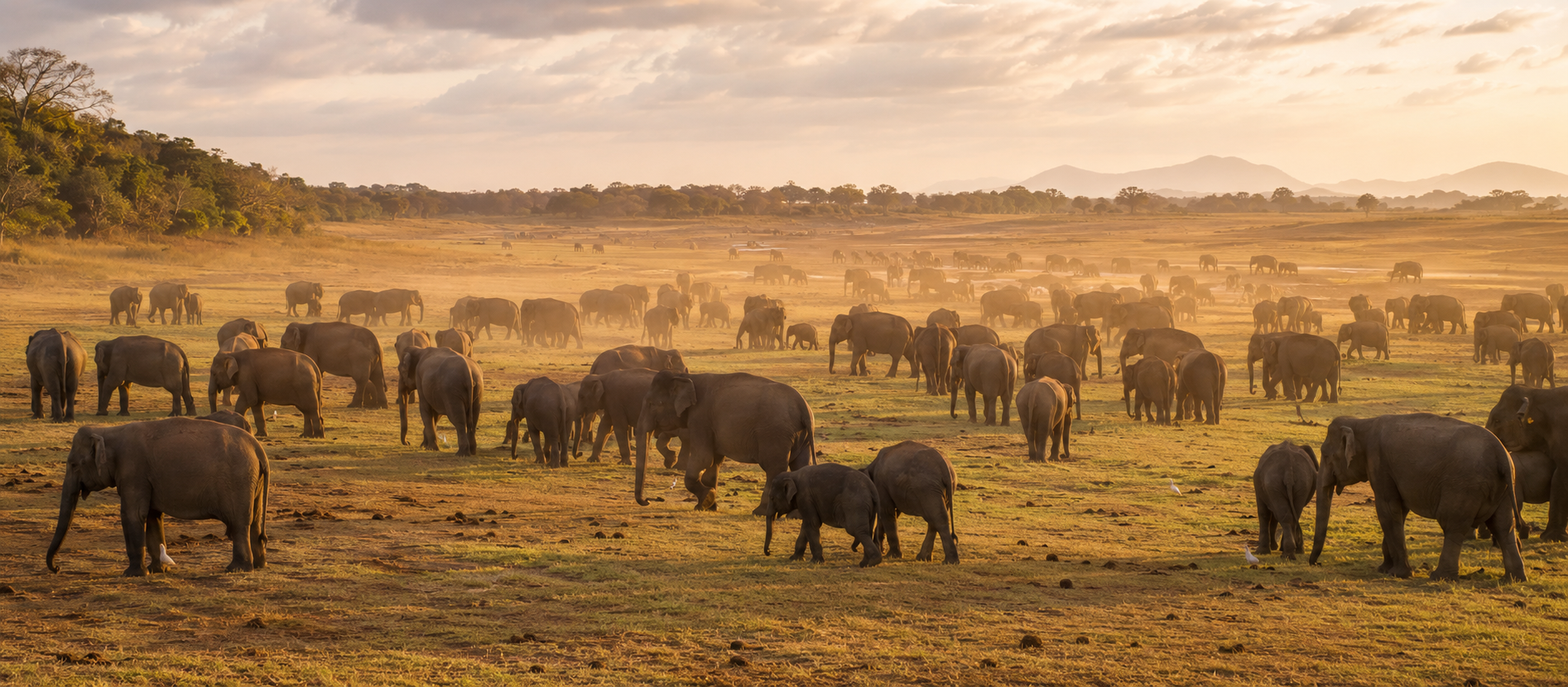
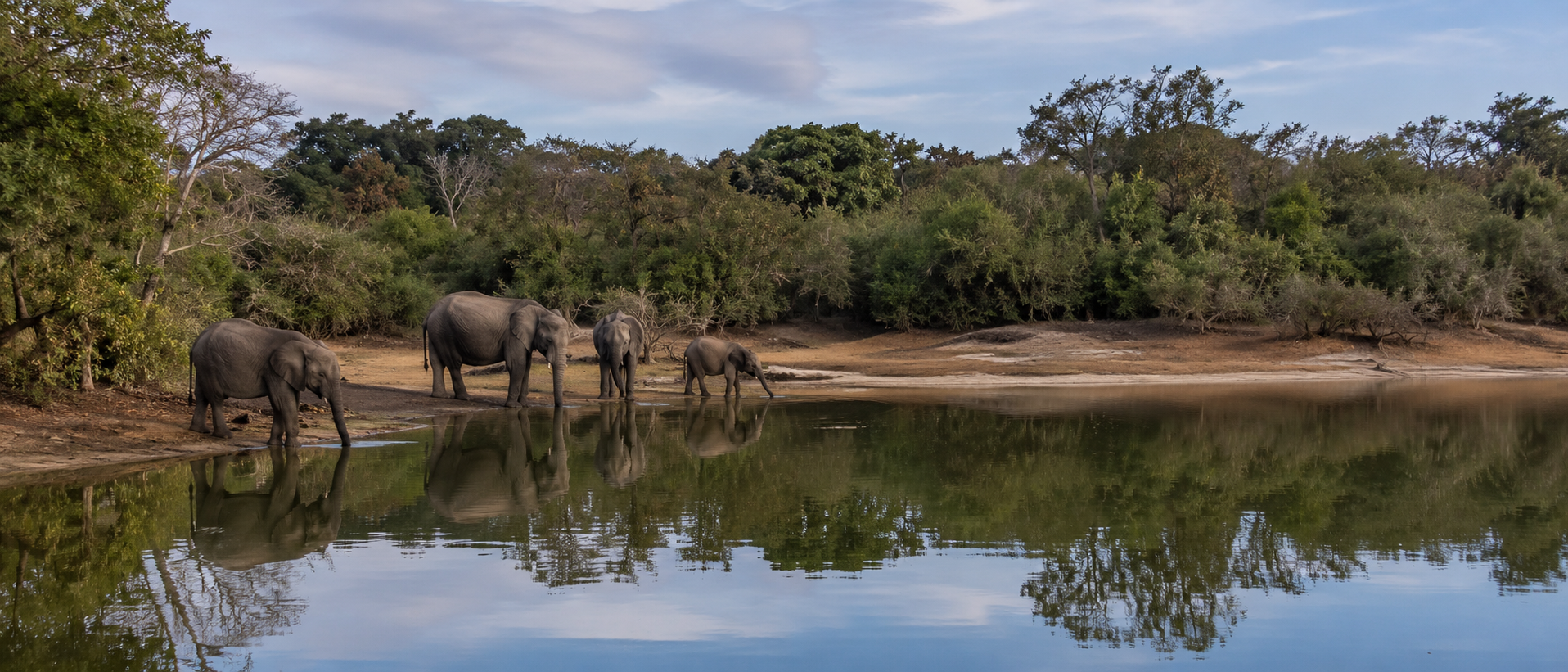
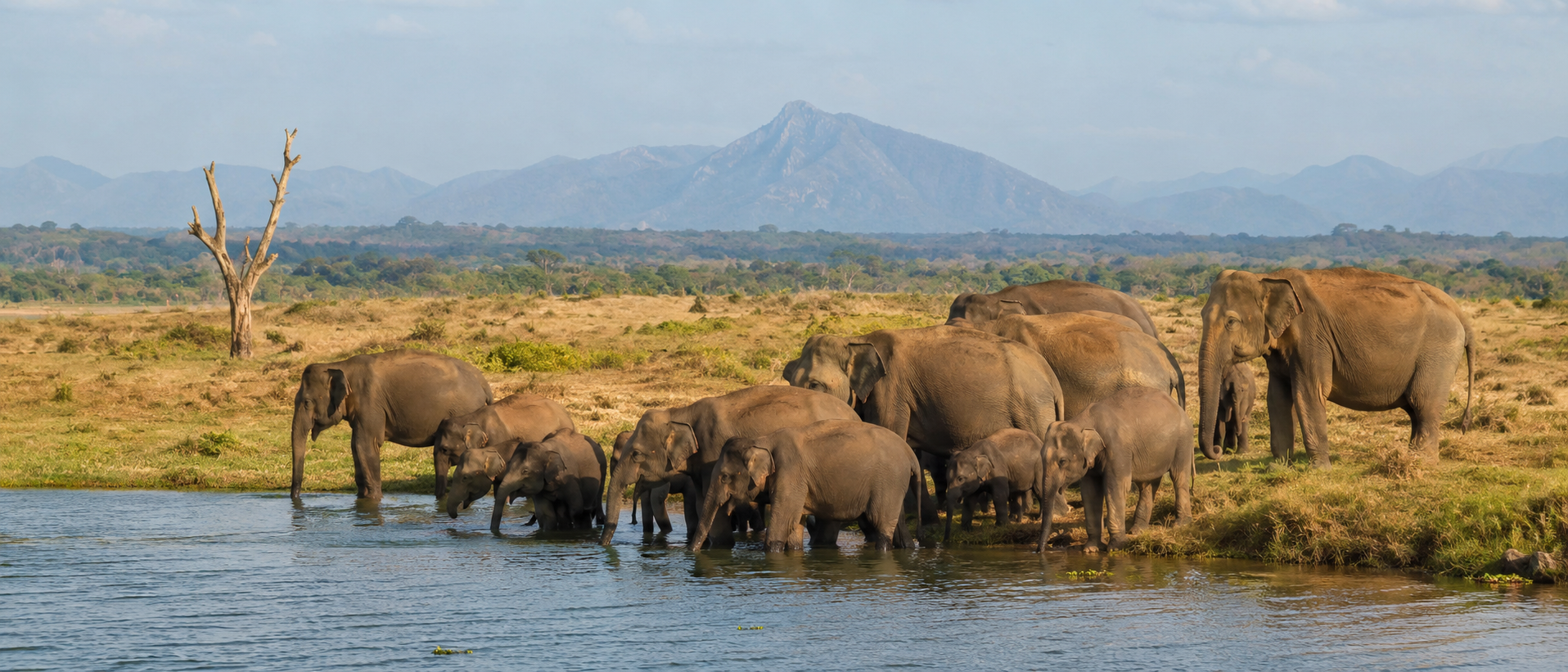
Minneriya is a world-renowned wilderness destination situated in the North Central Province of Sri Lanka, positioned firmly within the island's historic Cultural Triangle. Encompassing a rich tapestry of low-canopy dry-zone forests, scrublands, and vibrant wetlands, the region is anchored by the massive, ancient Minneriya Tank (reservoir). Minneriya National Park is celebrated globally for hosting "The Gathering"—the largest seasonal synchronization of Asian Elephants on the planet, where hundreds of wild elephants converge along the exposed lakebeds.
The landscape offers a spectacular visual experience, where lush green forest tracks open abruptly into vast, sun-drenched lakeside plains framed by distant mountain silhouettes. This unique geography ensures exceptional visibility for tracking big game and capturing high-clarity wildlife photography. The local community is deeply integrated into eco-tourism, operating low-impact safari networks and eco-lodges that celebrate the region's natural heritage. Because Minneriya sits as a primary wildlife pillar on major international itineraries, English is widely and fluently spoken by park naturalists, safari drivers, and hotel teams, delivering a seamless and deeply captivating safari experience.
Quick Facts
Essential travel information for Minneriya.
Location
Polonnaruwa District, North Central Province, Sri Lanka (strategically bordered by Habarana and Sigiriya).
Access Routes
Minneriya is easily reached via a scenic 3.5 to 4-hour private drive north from Colombo or the international airport via the central highways, or via a short 30-minute transfer from the nearby historic rock fortress of Sigiriya.
Language
Sinhala is the primary native language, while English is universally standard across all safari operations, wilderness lodges, and local hospitality venues.
Local Specialties
Freshly harvested woodapple juice, traditional clay-pot lake-fish curry, organic red heirloom rice, and sweet local dynamic bananas.
Iconic Safari & Accommodation Spots
Habarana Village by Cinnamon, Cinnamon Lodge Habarana, Jetwing Lake, The Deer Park Hotel, and Elephant Watch Hut.
Climate & Weather
What to expect when visiting Minneriya throughout the year.
The Best Time to Visit & The Gathering (July to October)
This marks the peak of the dry season in the North Central Province. As water holes across the region recede, massive multi-generational herds of wild elephants migrate out of the forest to feed on the fresh, sweet grass shoots carpeting the drying reservoir bed.
The Monsoon Window (November to January)
The northeast monsoon brings heavy, refreshing seasonal downpours to the plains. These rains rapidly replenish the massive ancient reservoir, turning the landscape into an emerald-green wetland and attracting an incredible array of migratory birds.
Pacing
Morning game drives are crisp and beautifully clear, while afternoon safaris feature warm breezes, making lightweight, breathable cotton clothing essential.
Important Places to Visit
The must-see landmarks and neighbourhoods across Minneriya.
Minneriya National Park
The sprawling, 8,889-hectare sanctuary serving as the primary domain for tracking wild elephant herds, sloth bears, and endemic birds.
The Minneriya Tank (Reservoir)
A magnificent, massive man-made lake constructed by King Mahasen in the 3rd century AD, serving as a historic engineering masterpiece and the ecological lifeblood of the park.
Habarana Crossroads
Located just minutes north, this buzzing eco-tourism node serves as the central jumping-off point for all regional safari jeeps, spice gardens, and lakeside village treks.
Kaudulla National Park Boundary
An interconnected wildlife corridor located adjacent to Minneriya; elephants frequently move seamlessly between these two parks depending on the seasonal movement of water.
The Sigiriya Rock Fortress Lookout Points
Elevated clearings along the outskirts of the park boundaries that offer dramatic, distant glimpses of the iconic lion rock rising out of the jungle canopy.
Best Things to Do
Top experiences and activities for visitors to Minneriya.
✓
Witness the Iconic Elephant Gathering
Book an afternoon 4x4 safari during the dry season to sit quietly in your jeep on the open lakebeds, watching hundreds of wild elephants socialize, bathe, and feed together.
✓
Track Diverse Wildlife at Sunrise
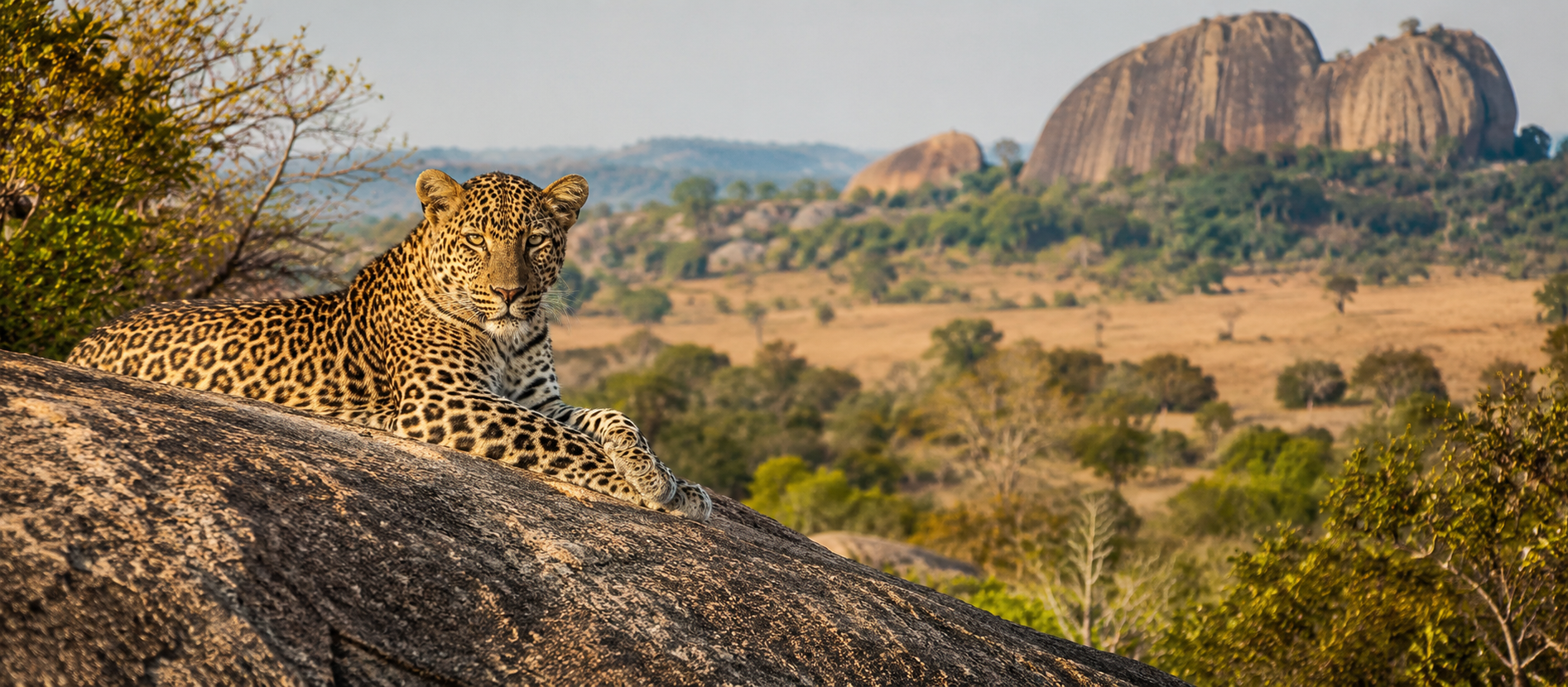
Set off on an early morning safari when the park is exceptionally quiet to spot elusive wildlife, including the Sri Lankan leopard, shaggy sloth bears, and large troops of purple-faced langurs.
✓
Spot Rare Endemic and Water Birds
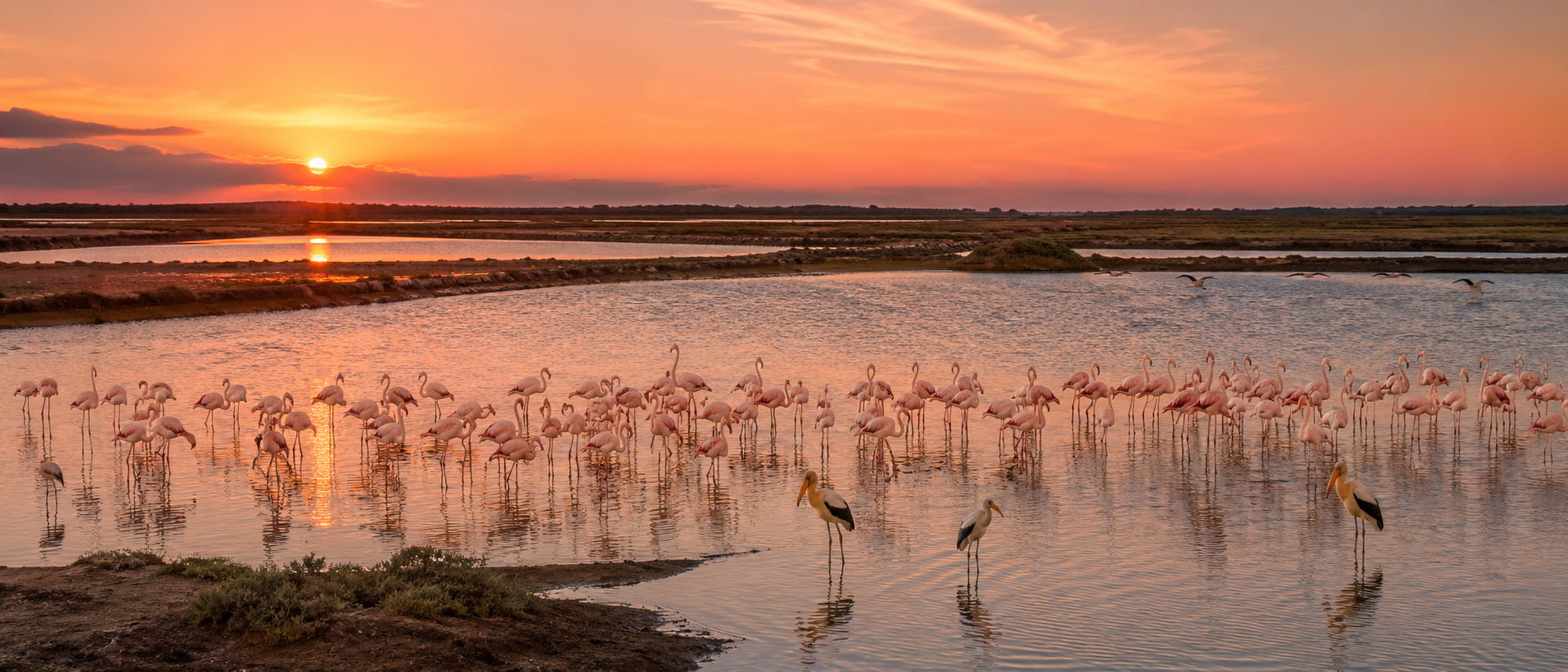
Bring your binoculars to track over 160 species of birds, including the striking lesser adjutant stork, painted storks, crested serpent eagles, and flocks of vibrant green bee-eaters.
✓
Take a Traditional Catamaran Ride in Habarana
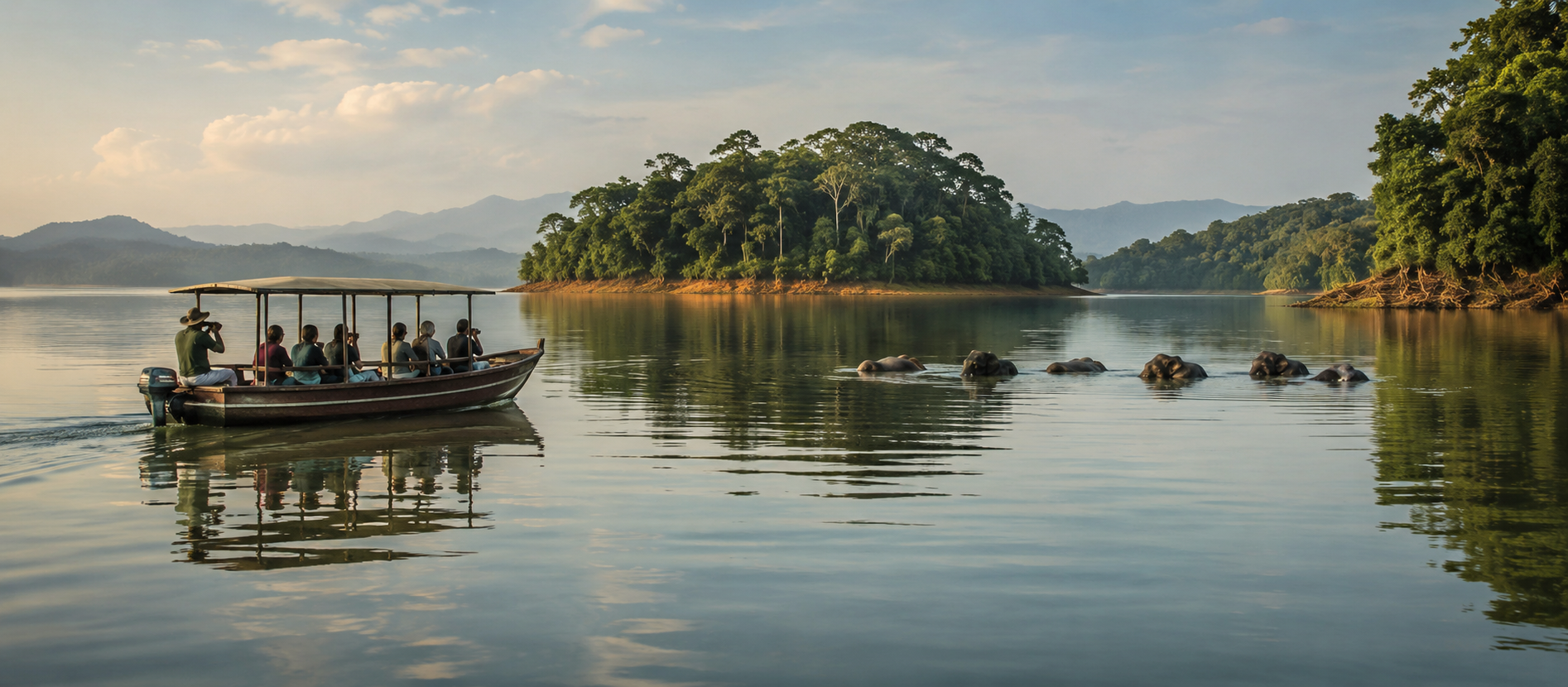
Pair your safari with a quiet morning boat ride on the peaceful lakes just outside the park, watching local fishermen and spotting wild monitor lizards.
✓
Savor an Authentic Village Rice and Curry
Visit a traditional mud-brick village kitchen on the outskirts of the park to enjoy an open-fire lunch served on lotus leaves, featuring local lake fish and hand-pounded spices.
✓
Relax at a Forest Eco-Resort
Spend a slow evening unwinding on an open-air wooden deck at a local nature resort, sipping an iced Ceylon tea while listening to the sounds of the surrounding dry-zone wilderness.
Frequently Asked Questions
Practical answers for British travellers planning a visit to Minneriya.
Minneriya is located approximately 185 kilometers northeast of Colombo. Traveling via a private air-conditioned vehicle along the well-paved central highways takes roughly 3.5 to 4 hours, making it an exceptionally smooth transit. Because of its central location, it serves as a perfect wildlife extension for itineraries exploring the ancient historic sites of Sigiriya, Dambulla, and Polonnaruwa.
Minneriya and Kaudulla are adjacent parks connected by a protected jungle wildlife corridor. The elephants roam completely freely between the two landscapes based on water levels and wind conditions. Local safari drivers monitor these daily movements closely; if the main elephant herds shift across the corridor on any given day, your safari can be easily routed to Kaudulla to ensure optimal viewing.
Yes, a Minneriya safari is highly safe and stands as one of the most magical family-friendly nature experiences in Sri Lanka. All game drives are conducted inside heavy-duty, elevated 4x4 vehicles driven by experienced wildlife drivers. Children thoroughly enjoy the clear, completely unobstructed visibility of large elephant families right from their secure seats.
Boutique eco-resorts and luxury hotels around Minneriya utilize the standard UK Type G 3-pin plug configuration. Because the region is a mature international tourism hub within the Cultural Triangle, almost all modern guest rooms feature universal multi-socket wall panels for charging smartphones and camera gear seamlessly.
More Cities to Explore
Continue planning your Sri Lanka journey with our other city and regional guides.
Colombo (The Vibrant Capital Gateway)
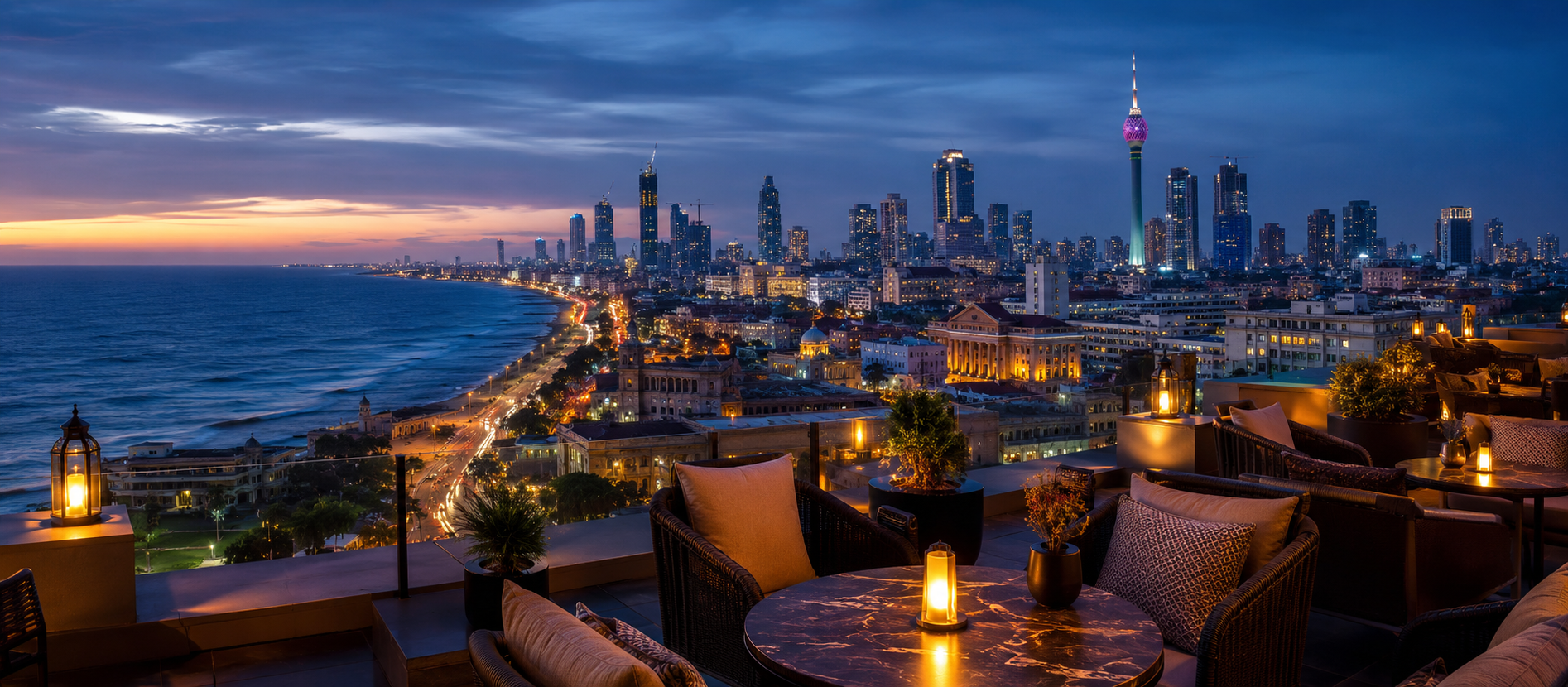
Sample world-class contemporary dining, explore grand colonial-era architecture, and experience the emerging luxury rooftop lifestyle overlooking the Indian Ocean.
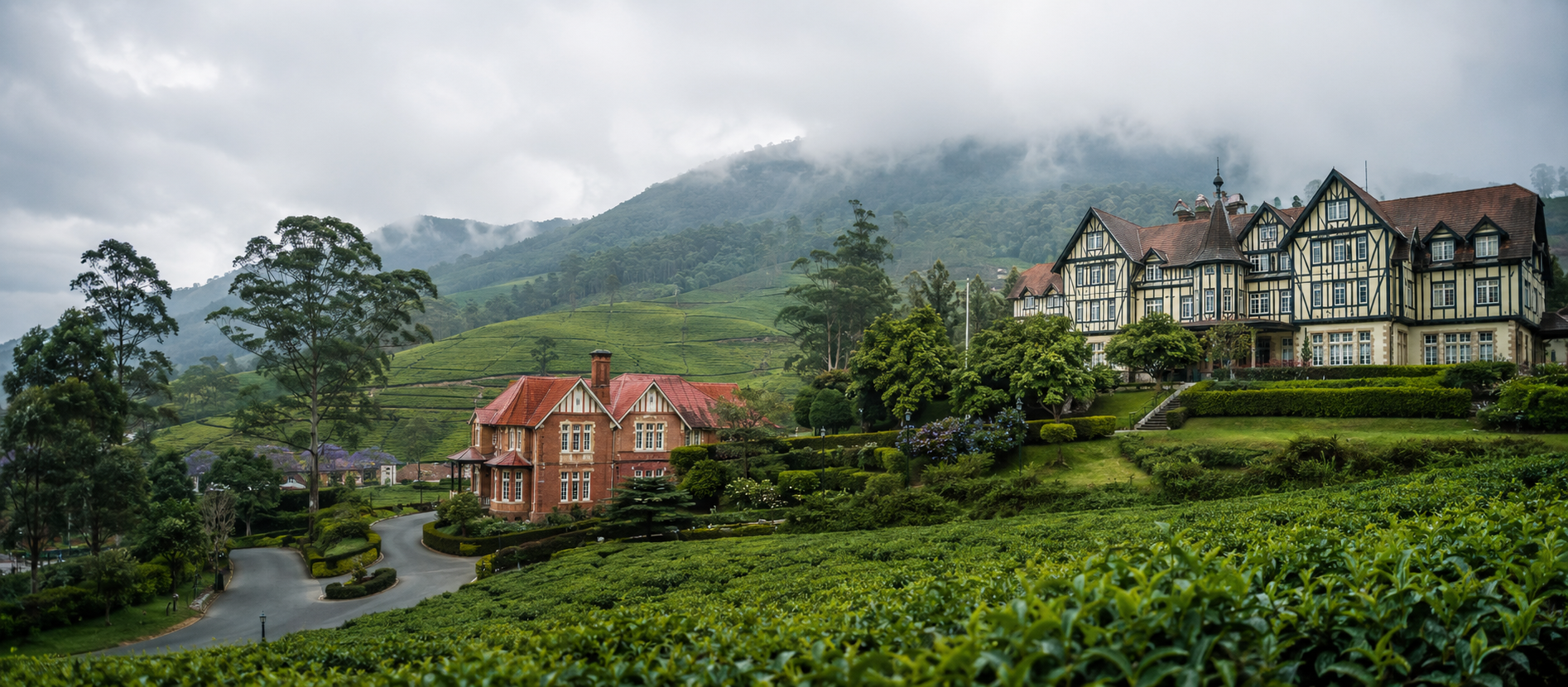
Escape to Sri Lanka's cool hill-country capital — Tudor mansions, emerald tea estates, elegant high tea, and mist-veiled mountain walks in the heart of Ceylon tea country.
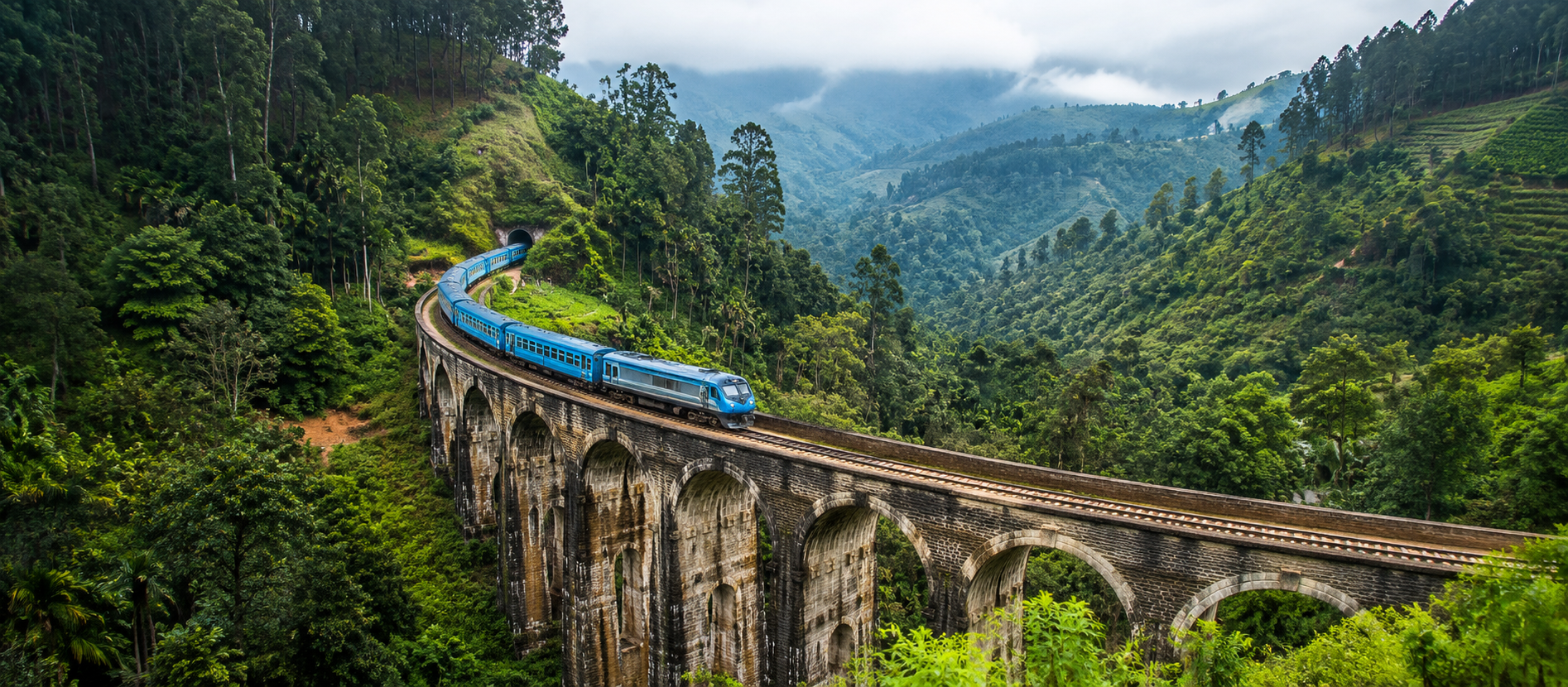
Discover Sri Lanka's adventure capital — the Nine Arch Bridge, Little Adam's Peak, Ella Rock, cascading waterfalls, and boutique jungle cafés in the misty highlands.
Sri Lanka's adrenaline capital — Class III rapids on the Kelani River, jungle canyoning, rainforest treks, and the historic Bridge on the River Kwai filming site.
Walk UNESCO-listed ramparts, cobblestone lanes, and whitewashed Dutch villas — Sri Lanka's most sophisticated coastal heritage city on the Indian Ocean.
Sri Lanka's original beach town — snorkel with sea turtles, ride reef breaks, dive shipwrecks, and unwind on golden Narigama Beach along the southwest coast.
Sri Lanka's upscale lagoon resort — jet skiing on the Bentota River, golden Ventura Beach, Geoffrey Bawa's Lunuganga Estate, and premier Ayurvedic wellness.
Sri Lanka's iconic crescent bay — calm reef-protected swimming, Jungle Beach, the Japanese Peace Pagoda, and a vibrant cafe culture minutes from Galle Fort.
Sri Lanka's sandy surf capital — gentle sand-bottom breaks, iconic stilt fishermen, Taprobane Island, and cliffside boutique resorts on a sweeping southern crescent bay.
Sri Lanka's marine wildlife capital — dawn blue whale safaris, iconic Coconut Tree Hill, golden crescent beaches, and vibrant seafood cafes on the south coast.
The wild south's crown jewel — hidden rocky coves, clifftop boutique villas, Silent Beach, Hummanaya Blowhole, and total coastal isolation away from the crowds.
Where the south coast begins — the protected Golden Mile, historic Barberyn Lighthouse island, Arab trading heritage, and calm year-round swimming north of Bentota.
Sri Lanka's east coast capital — Koneswaram Temple on Swami Rock, pristine Nilaveli Beach, Pigeon Island reefs, and blue whale safaris May to September.
Sri Lanka's east coast crown jewel — powder-soft white sand, crystal-clear turquoise waters, and the gateway to Pigeon Island National Park snorkeling.
One of the world's longest shallow reef coastlines — knee-deep turquoise waters, five-star eco-resorts, and a calm horseshoe bay on Sri Lanka's east coast.
Sri Lanka's surfing capital — world-class Main Point breaks, bohemian beach bars, Pottuvil Lagoon elephant safaris, and Kumana wildlife on the remote southeast coast.
Sri Lanka's premier wildlife sanctuary — the world's highest leopard density, luxury tented camps, elephant herds at watering holes, and Sithulpawwa rock temples.
Sri Lanka's largest national park — sixty natural Villu lakes, uncrowded leopard tracking, sloth bears, and raw northwest wilderness on the Land of Lakes.
Sri Lanka's premier elephant sanctuary — guaranteed wild herds on open grasslands, the ethical Elephant Transit Home, and reservoir safaris between highlands and south coast.
Sri Lanka's first Ramsar wetland — flamingo flocks, five coastal lagoons, and uncrowded bird safaris between Hambantota and Yala on the southeast coast.
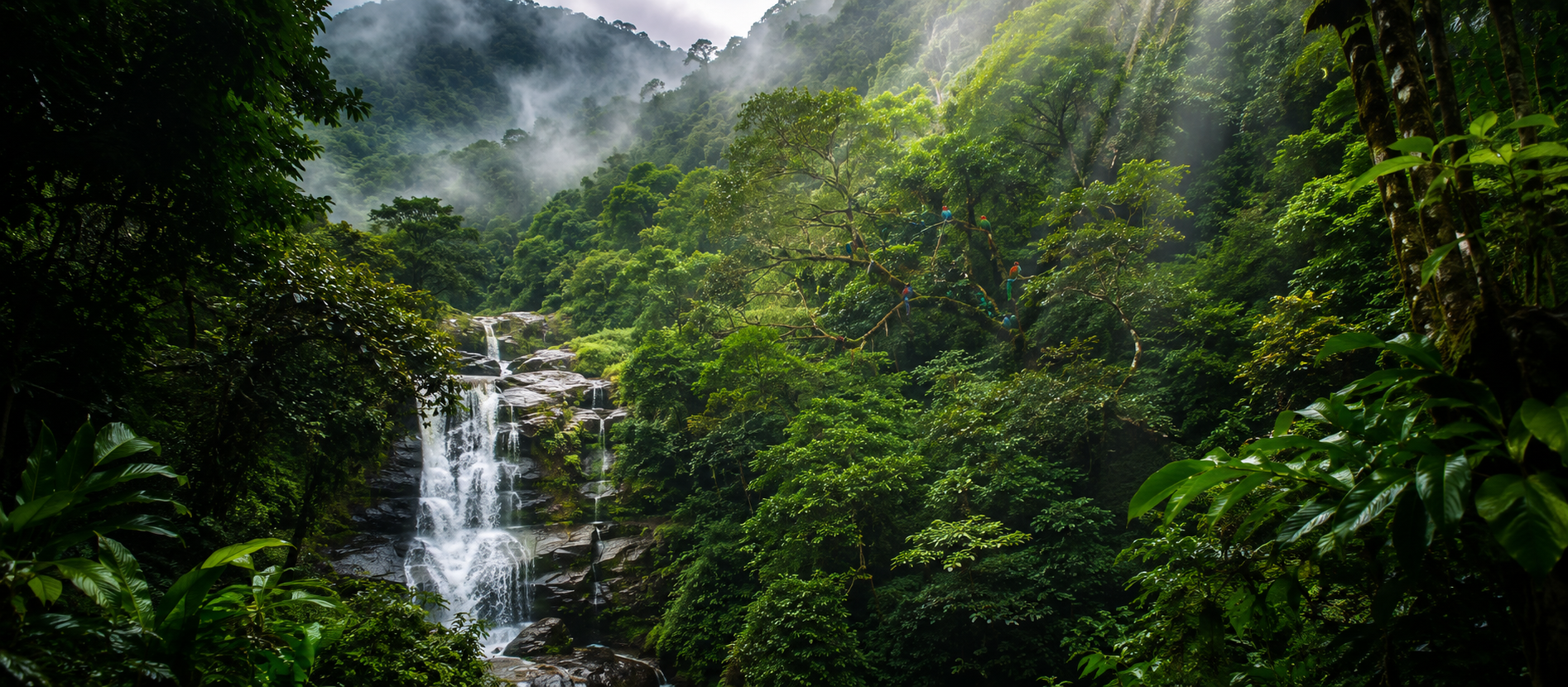
Sri Lanka's last primary rainforest — UNESCO World Heritage Site, endemic bird waves, jungle waterfalls, and luxury eco-lodges in the southwestern wet zone.